Hidden Frequencies: Inside the Underground Design Communities Quietly Reshaping American Visual Culture
If you want to understand where American design is actually going, stop looking at the award annuals.
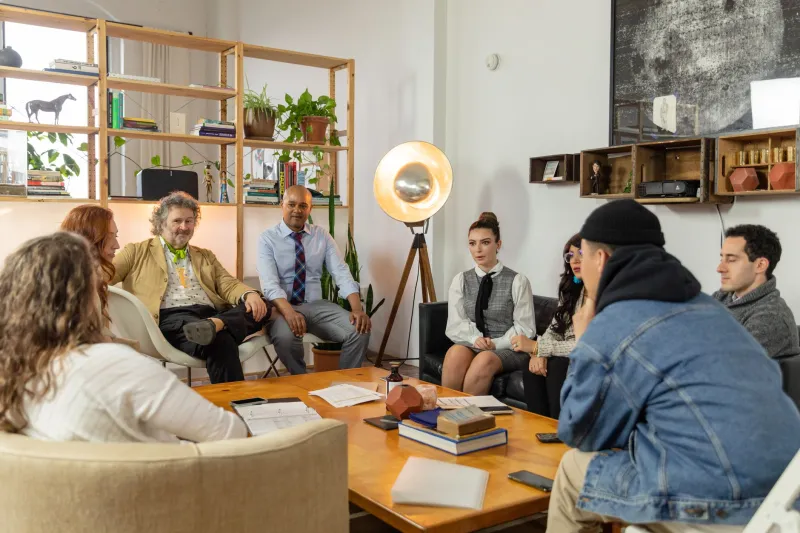
Don't get us wrong — the big design publications, the prestigious competitions, the agency showcases, they all have their place. But there's a whole other ecosystem of creative energy operating just below the radar, in spaces most people never think to look. Discord servers with strict invite-only policies. Regional zine fairs where the most interesting work changes hands for five dollars. Monthly Zoom meetups that nobody tweets about. Group chats that have been running for years.
These are the underground design communities of America, and they're quietly producing some of the most interesting visual work in the country.
Why Underground?
First, let's be clear about what we mean by "underground." We're not talking about anything illicit. We're talking about creative communities that operate outside the mainstream attention economy — groups that aren't optimizing for followers, aren't pitching to agencies, aren't particularly interested in being discovered. They exist because the people in them find genuine value in the exchange that happens there.
"The whole point is that it's not public," explains Cleo Barnett, a Portland-based illustrator who belongs to a collective of about thirty designers spread across the Pacific Northwest. The group shares work-in-progress pieces, gives unfiltered feedback, and collaborates on occasional self-initiated projects. They have no social media presence as a collective. "The moment you're performing for an audience, the feedback changes. The work changes. We wanted a space where we could be genuinely experimental without it being content."
That distinction — between genuine creative exploration and content production — comes up again and again in conversations with members of these communities.
The Discord Generation
For a lot of younger American designers, Discord has become the infrastructure for exactly this kind of community. The platform's server structure allows for granular organization — separate channels for work-in-progress critiques, industry discussion, resource sharing, off-topic conversation — and its relative obscurity compared to Instagram or TikTok makes it feel genuinely private.
Raj Patel, a 26-year-old motion designer based in Austin, moderates a server that started as a small group of college friends and has grown to around 400 members, all designers at various career stages. "We have a pretty rigorous vetting process now," he says. "Someone has to be referred by an existing member, and they have to share actual work — not a portfolio, just something they're working on — before they get full access."
The quality of critique that happens in spaces like Raj's server is, by multiple accounts, significantly more useful than what you'd get from posting publicly. "On Instagram, you get heart emojis and 'this is fire,'" he says. "In the server, you get someone telling you that your color choices are fighting each other and here's specifically why. That's the stuff that makes you better."
The work emerging from these Discord communities also tends to have a particular character: technically ambitious, often formally adventurous, less constrained by what's currently trending. Because the audience is other designers rather than the general public, there's more appetite for work that takes risks.
Geographic Pockets of Innovation
Not all of this activity is digital. Across America, local design communities are doing something that major coastal studios often struggle to replicate: building genuine creative ecosystems rooted in specific places.
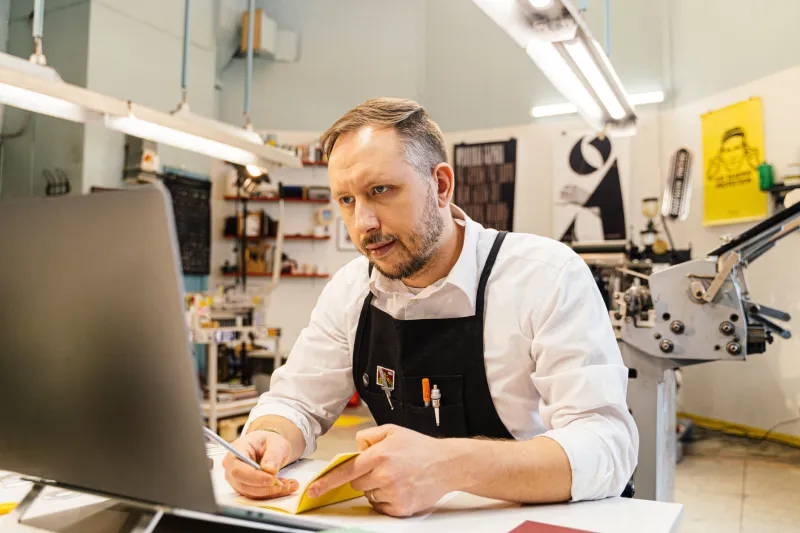
In Kansas City, a loose collective of illustrators and graphic designers has been meeting monthly for the better part of five years. They rent a shared studio space a few days a month, organize occasional public shows, and maintain a zine that's distributed through local independent bookstores and record shops. Their aesthetic — deeply influenced by the region's jazz history, agricultural iconography, and Midwestern vernacular typography — is distinctly their own.
"We're not trying to look like we're from New York or LA," says collective member and illustrator Devon Hicks. "We're trying to make work that could only come from here. That's actually a harder creative problem than it sounds."
In New Orleans, a similar community has formed around printmaking and illustration, drawing on the city's rich visual traditions — Mardi Gras poster art, funeral parade culture, voodoo iconography — and pushing them into contemporary contexts. In Detroit, designers are working with the city's industrial and musical heritage. In Albuquerque, there's a thriving community of designers engaging with Southwestern Indigenous visual traditions in ways that are both respectful and genuinely innovative.
What's striking about all of these communities is how deliberately local they are. In an era when digital tools theoretically allow designers to work from anywhere for anyone, these groups are making an active choice to be of a specific place.
The Aesthetic Signatures
Is there a visual language that unites work coming out of these underground spaces? Not exactly — the whole point is that each community is developing its own visual sensibility rather than chasing a shared trend. But there are some common characteristics worth noting.
Work from these communities tends to be less polished in the conventional sense, but more intentional. There's often evidence of process — visible texture, deliberate imperfection, formal decisions that prioritize meaning over smoothness. It's work that seems to know what it's trying to say and doesn't apologize for the saying of it.
There's also a notable willingness to engage with difficult or complex subject matter. Without the pressure of appealing to a mass audience or satisfying a client brief, designers in these spaces have the freedom to make work about things that genuinely interest or concern them. The results can be uncomfortable, funny, political, personal — sometimes all at once.
"The mainstream design world has gotten very good at a certain kind of beautiful," observes Barnett. "What you find in spaces like ours is a different conversation about what design is even for."
Why It Matters
Here's the thing about underground creative communities: they have historically been where American visual culture renews itself. The designers who defined the look of the 1960s counterculture were operating in underground networks. The punk and hip-hop aesthetics that reshaped graphic design in the 1980s and 90s came from scenes, not studios. The DIY zine culture of the 90s produced visual sensibilities that eventually filtered into mainstream design.
The same process is happening right now, in Discord servers and monthly meetups and shared studio spaces across the country. Most of it will stay underground — and honestly, that's kind of the point. But some of it will surface, and when it does, it'll have the kind of depth and rootedness that only comes from genuine community.
The best American design has always come from people making things for each other before they make things for everyone else. That hasn't changed. You just have to know where to look.